
The Parts That Keep Your Garage Door Moving: RoMac's guide to a smooth and quite door.

A garage door might seem simple, press a button and it moves, but behind that convenience is a surprisingly complex system. In Florida especially, where heat, humidity, salt air, and sudden storms are part of daily life, every component of your garage door plays an important role. Understanding these parts can help homeowners spot issues early and keep everything running safely and smoothly.
The Main Parts of a Garage Door System
Your garage door isn’t just one piece, it’s a collection of mechanical parts working together. Here’s a closer look at each component and what it does:
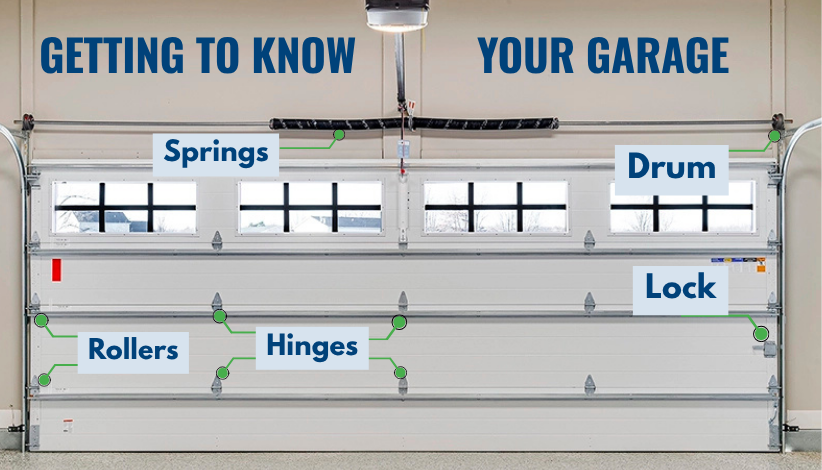
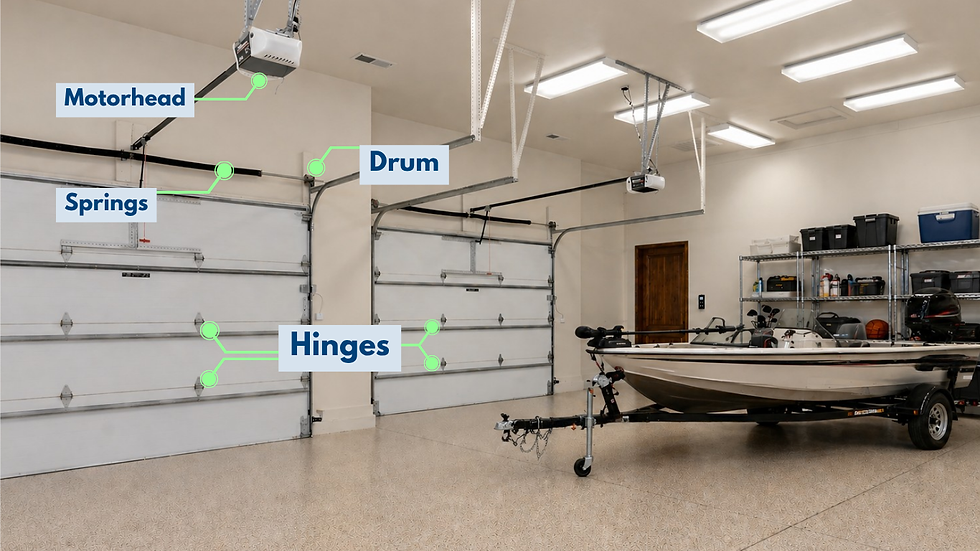
1. Springs (The Heavy Lifters)
Garage door springs do most of the hard work. Since doors can weigh hundreds of pounds, springs counterbalance that weight so the door can open and close with minimal effort. Now there are two kinds of springs in most garages.
Torsion springs are mounted above the door and twist to create tension.
Extension springs run along the sides and stretch as the door moves.
In Florida’s humid, salty air, these springs are especially vulnerable to rust and wear, making them one of the most commonly replaced parts.
2. Drums (Cable Management)
Located at the top corners of the door, drums wind and unwind the cables as the door opens and closes. They help ensure smooth, even movement on both sides.
3. Rollers (Smooth Movement)
Rollers are small wheels that move along the tracks.
Typically made of steel or nylon
Responsible for quiet, smooth operation
Worn rollers are a common cause of noisy or jerky garage doors.
4. Hinges (Flexibility Between Panels)
Garage doors are made of multiple sections. Hinges connect these panels and allow the door to bend as it travels along the tracks.
Over time, hinges can loosen or crack due to repeated use.
5. Lock (Security Feature)
Manual locks provide an added layer of security when needed, especially for extended periods away from home.
6. Opener Carriage (Trolley)
The carriage (or trolley) travels along the opener rail and connects to another part called the hockey stick.
Moves back and forth to open or close the door
Works directly with the motor
7. The “Hockey Stick” (Opener Arm)
This uniquely named part is the curved arm that connects the garage door to the opener.
Transfers motion from the opener to the door
If bent or loose, it can cause uneven or jerky movement
8. Motorhead (The Power Source)
Mounted on the ceiling, the motorhead powers the entire system.
Drives the opener mechanism
Essential for automatic operation—especially helpful during Florida’s sudden rainstorms
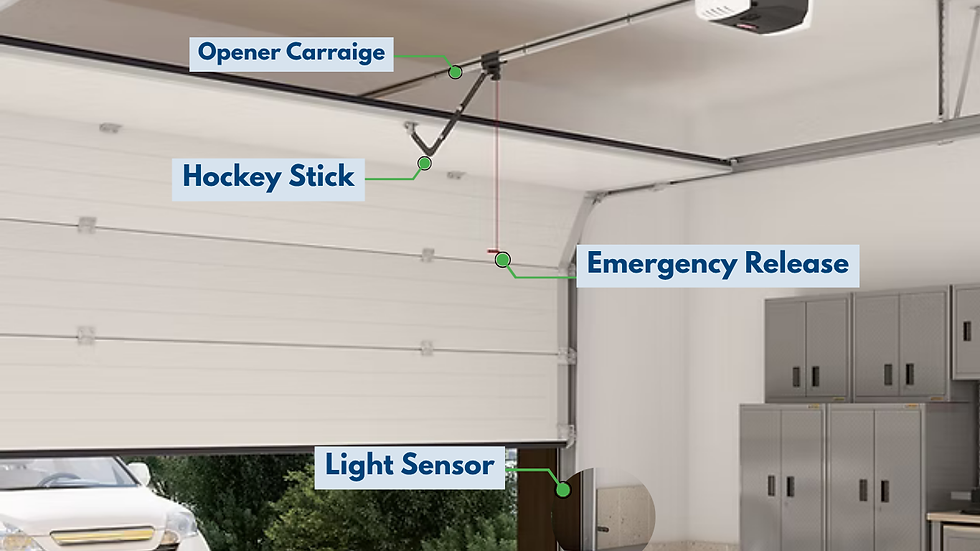
9. Emergency Release (Manual Control)
In the event of a power outage—common during storms—this feature allows you to disconnect the opener and operate the door manually.
10. Safety Sensors (Protection System)
Located near the bottom of the door, these sensors prevent the door from closing if something is in its path.
Essential for preventing accidents
Must remain aligned and clean to function properly
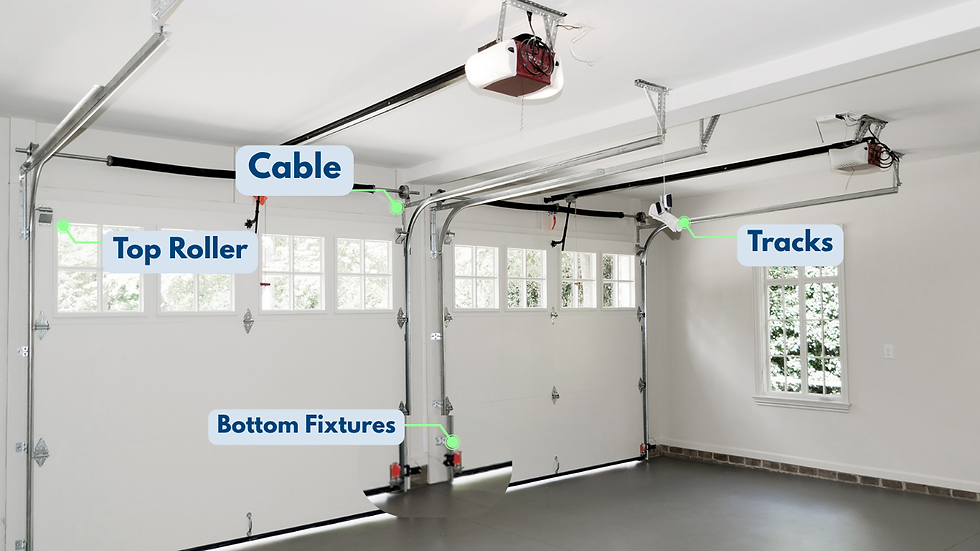
11. Cables (Support & Safety)
Cables work alongside the springs to lift and lower the door safely. They carry tension and help control the door’s movement.
If a cable frays or snaps, the door can become unbalanced or unsafe.
They are anchored at the bottom fixture and wind around drums at the top.
12. Top Roller (Transition Guide)
The top roller plays a key role when the door transitions from vertical to horizontal.
Helps guide the door smoothly into the open position
Small but critical for proper alignment
13. Tracks (The Guide System)
Tracks are the metal rails that guide the door’s path.
Vertical tracks guide the door upward.
Horizontal tracks hold the door when it’s fully open.
If tracks become bent or misaligned, the door may stick, shake, or come off track entirely.
Why All These Parts Matter
When all of these components are working together, your garage door operates quietly, efficiently, and safely. But Florida’s climate accelerates wear and tear:
Humidity and salt air can cause rust and corrosion
Heat can weaken materials over time
Storms can put extra strain on the system
That’s why regular maintenance and inspections are so important—not just for convenience, but for safety.
Final Thoughts
Your garage door is one of the largest moving systems in your home, and RoMac knows hard your garage door works and how quickly small issues can show up. If you hear new noises or notice uneven movement, it is worth checking before it turns into a bigger problem. At RoMac, we have been trusted by Florida homeowners for years because we keep things simple and do the work right. At RoMac, our team is here to take a look, explain what is going on, and get your door back on track. Call 352-748-4575 or visit https://www.romacfl.com/services/garage-door-service to schedule service.


Garage doors look fairly simple from the outside, but this article shows just how many parts are involved in making them work safely. I found the explanation of the opener carriage and emergency release particularly useful. Articles like this make it easier for homeowners to recognize when garage door repair Pembroke Pines may be needed.
시간을 효율적으로 활용할 수 있는 서비스를 찾던 중 좋은 선택을 하게 되어 만족스러웠습니다. 처음 문의할 때부터 친절한 응대를 받을 수 있었고 진행 과정도 매우 깔끔했습니다. 이용 중에는 상품권매입 서비스가 신속하게 처리되어 기다림이 거의 없었으며 필요한 안내도 자세하게 제공되었습니다. 전반적으로 믿음이 가는 서비스였고 앞으로도 계속 이용하고 싶은 생각이 들었습니다.
처음 접했지만 설명이 잘 되어 있어 어렵지 않게 사용할 수 있었습니다. 특히 혜택이 더해지면서 문화상품권 경제적인 장점이 커져 매우 만족스러운 선택이었다고 생각합니다.
설명이 간결하면서도 핵심을 잘 담고 있어 읽기 편했습니다. 관련 정보를 찾는 분들에게 실질적인 도움이 노래방알바 될 만한 내용이 많았습니다.
하루 종일 서서 움직이는 일이 많아 다리가 무거웠는데 출장마사지 이용 후 붓기가 줄어들고 혈액순환이 좋아져서 훨씬 가벼운 느낌으로 생활할 수 있었습니다