
Why RoMac Truss: Central Florida's Standard for Roof and Floor Truss Manufacturing

When a builder's schedule is on the line, the truss manufacturer they choose is one of the most consequential decisions they make. A delayed delivery, a damaged bundle, or a truss that does not fit the plan does not just cost money. It costs time that cannot be recovered.
RoMac Truss exists because Central Florida builders deserve better than the gamble. Two manufacturing facilities. A dedicated delivery fleet. Local designers who know Florida code the way they know their own blueprints. And a standard of material quality that most manufacturers do not advertise because they cannot match it.
Here is exactly what sets RoMac Truss apart.
Two Manufacturing Facilities Built for Central Florida's Volume
RoMac operates two truss manufacturing facilities serving the Central Florida market. Both are equipped with current production technology, and both are staffed by experienced fabricators who build to the engineered specification, every time.
Two facilities mean more than capacity. It means redundancy, geographic flexibility, and the ability to prioritize your project when it matters. When one of the highest-volume building markets in the country is your backyard, a single-facility operation is a single point of failure.

Local Designers Who Know How Florida Builds
Florida is not like any other state when it comes to structural requirements. Wind uplift loads are the controlling factor in most Florida counties, and proper truss design and fastening are critical to preventing failure during high wind events. Florida building codes are among the strictest in the United States, designed to protect structures from severe weather, covering every aspect of the design, engineering, and installation of wood roof trusses.

That is not a problem you want to hand to someone who has never worked in this market.
RoMac Truss employs local truss designers based in Central Florida. They design with Florida's wind load requirements, county-specific code variations, ceiling heights, load-bearing walls, attic access, air handler placement, and truss flow baked into the process from day one. This work is not sent out of state or handed off to an offshore design team. It is done here, by people who understand how Florida homes and commercial structures are built, inspected, and permitted.

That local knowledge shortens the path from plan to approved shop drawings. It also means fewer RFIs, fewer surprises in the field, and truss packages that fit the way they were designed to fit.
The Triangle: Why Trusses Work and Why Precision Matters

A truss is one of the most structurally efficient systems in construction, and its strength comes from geometry. The triangle is the only rigid geometric shape that cannot be deformed by applying force to its joints. Unlike a square or rectangle, which will rack and shift under load, a triangle distributes force through its members as pure tension or compression, with no bending.
This is why roofs and floors are systems, not just surfaces. A properly engineered truss system handles deflection, distributes load across the span, and transfers forces to the bearing walls with precision. Truss deflection, the controlled, engineered flex a truss experiences under live and dead load, is calculated before a single board is cut. A roof and a floor are connected systems, and the truss is doing work that affects everything above and below it.
When the design is wrong, or the materials are compromised, that failure shows up in ceilings that wave, floors that bounce, and structures that do not perform as built. Getting it right starts with the engineering and holds through the lumber in the frame.
Lumber Grade: The Difference You Can See and Measure

Not all trusses are built with the same material. This is one of the least-discussed differences between manufacturers and one of the most consequential. RoMac Truss uses #1 lumber for top and bottom chords, the primary load-carrying members that run along the top and bottom of every truss. #1 lumber is a high-quality structural material with small, tight knots, chosen for load-bearing applications where both strength and consistency matter. The chords are where bending stress concentrates. Using #1 grade material means straighter members, tighter connections, and more predictable long-term performance.
For the webbing, the interior members that triangulate the truss and transfer load between chords, RoMac uses #2 and #3 lumber, which is structurally appropriate for those members and consistent with sound engineering practice. The design and the material align at every member.
The result is a truss built the right way throughout, not to minimum specification across the board. Builders who have switched to RoMac Truss notice the difference when they unstrap the bundle: straighter cords, cleaner connections, and fewer shimming headaches for the framers and sheet-rockers who follow.
Tight Webbing Spacing: No Value-Engineering the Strength Out
The spacing between web members in a truss is not arbitrary. Tighter spacing means more triangulation, better load transfer, and a stiffer, more reliable finished structure. It also means the truss performs as a system rather than relying on individual members to carry more than their share.

Some manufacturers maximize the space between webs to reduce material cost. RoMac does not take that approach. Our trusses are built with webbing spacing that reflects the engineering, not the material budget. There is no value-engineering the structural integrity out of a product that holds up roofs and floors.
A Dedicated Delivery Fleet That Shows Up When It Says It Will
A truss delivery is not a small event on a jobsite. It requires a crane or boom truck, a cleared landing area, a framing crew ready to receive, and a schedule that does not have room for a same-day call saying the truck is running four hours late.
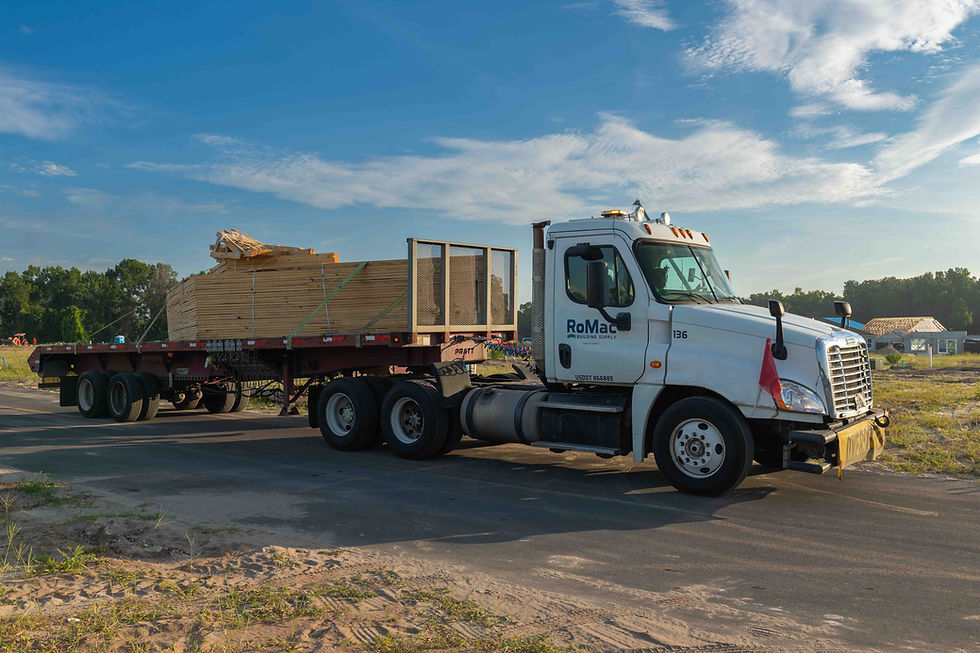
RoMac Truss operates its own dedicated delivery fleet, staffed by drivers who know this region's roads, jobsite access points, and the communication standards that keep a framing crew moving. When RoMac says it will be there, it will be there.
A dedicated fleet also means fewer handoffs, less damage exposure, and a driver who is accountable to the same operation that manufactured the product. If something requires attention, there is no finger-pointing between a manufacturer and a third-party hauler. The solution comes from the same team.
On-Site Repair Capability
Even when a truss arrives in perfect condition, job conditions change. A truss gets bumped by equipment, a field modification is needed, or a piece requires repair before installation. RoMac Truss has on-staff repair capability to address those situations without pulling the brakes on your project. That is a resource most manufacturers cannot offer, and one that matters more than builders expect until the moment they need it.
Truss Damage Prevention: How We Load and Deliver
Truss damage in transit is more common than it should be, and it almost always comes back to how the load is staged and secured. RoMac's delivery process is built around protecting the product from the plant to the drop. Bundles are loaded to minimize stress on individual members during transport, and drivers are trained to identify and flag any concerns before they become a job site problem.
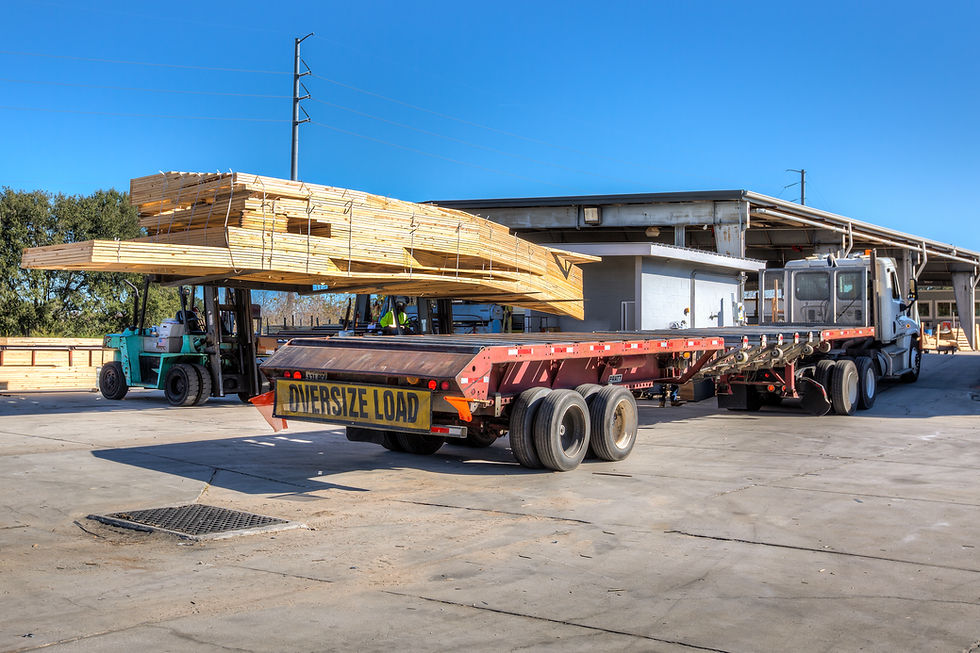
Less damage means fewer delays, fewer repair calls, and a framing crew that can move through the package without sorting out what can and cannot be used.
The Relationship Behind Every Order
Building supply is a relationship business. The suppliers who earn long-term trust are the ones who know your projects, communicate proactively, and solve problems without being asked twice.
RoMac Truss is not a manufacturer you place an order with and never hear from again. You have a dedicated contact who knows your job, from the initial design coordination to the final delivery confirmation. That consistency is part of what makes the experience different, and it is part of why contractors who have worked with us stay.
RoMac has been operating in Central Florida for over 80 years. The builders who have trusted us for decades do so because the relationship is real and the product backs it up.
Frequently Asked Questions About RoMac Truss
What types of trusses does RoMac manufacture? RoMac manufactures roof trusses and floor trusses for residential and commercial construction across Central Florida. Custom configurations are available through our local design team.
Where are RoMac's truss manufacturing facilities located? RoMac operates two truss manufacturing facilities serving the Central Florida market, positioned to serve builders across the region efficiently.
Does RoMac Truss provide stamped engineered drawings? Yes. Our local designers produce shop drawings that support the permitting process and comply with Florida Building Code requirements.
Does RoMac deliver trusses to the jobsite? Yes. RoMac operates a dedicated delivery fleet for truss delivery across Central Florida. Delivery scheduling is coordinated directly with your project timeline.
What lumber grade does RoMac use for truss construction? RoMac uses #1 grade lumber for top and bottom chords and #2/#3 for web members, consistent with sound engineering practice and above the minimum standard used by many manufacturers.
How do I get a truss quote from RoMac? Contact our team at romacfl.com or call 352-787-4545 to connect with a truss specialist.
RoMac Building Supply has served Central Florida's construction industry for over 80 years from locations across the region. From foundation to rooftop, RoMac has you covered.


Thank you so much for sharing these amazing tips. I must say you are an incredible writer, I love the way that you describe things. Please keep sharing. At Hyprforge, we're passionate about building scalable Web3 solutions as a leading Blockchain Development Company. Looking forward to more valuable content!
Excellent post! The tips you've shared are practical and relevant for businesses looking to improve their digital presence. Thanks for providing such useful insights. Reddy Anna
I spent a few minutes on the interface, and I liked what I saw. It’s balanced, user-friendly, and doesn’t overwhelm you with too much at once.
After browsing through the interface, I can say it’s well put together. It’s clean, easy on the eyes, and simple to move between different sections.
I checked the interface for a bit, and it’s quite impressive. Everything feels neatly arranged, and navigating around is really straightforward.